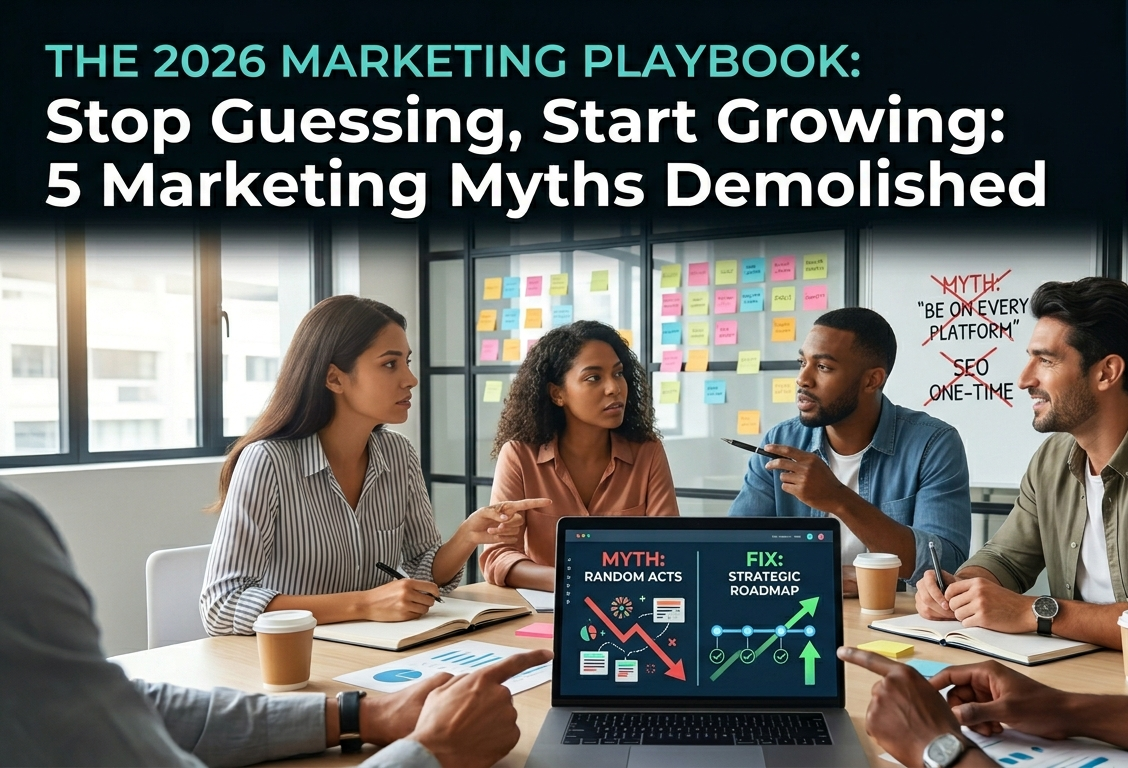
In the fast-paced digital world of 2026, the noise has never been louder. With AI-generated content flooding every channel, consumers have developed a “filter for the fake.” They are no longer looking for the most visible brand; they are looking for the most intentional one.
For the modern business owner, “good marketing” is no longer about being everywhere at once. It’s about being in the right place, at the right moment, with a solution that actually solves a problem.
1. The Rise of “AEO” and the Evolution of Search
For nearly two decades, SEO (Search Engine Optimization) was the undisputed king. While SEO isn’t dead, it has evolved into AEO (Answer Engine Optimization).
With the universal rollout of AI-powered search assistants, users are moving away from clicking through a list of ten blue links. Instead, they are asking complex, conversational questions and expecting a direct, synthesized answer.
- The Trend: Search queries are now 2-3 times longer than they were just two years ago.
- The Strategy: To stay visible, your content must be structured for machines to parse. This means using FAQ schemas, clear headings, and providing “zero-click” value—direct answers that position your brand as the definitive authority in the eyes of an AI.
2. ROI Over Vanity Metrics: The “Business-Owner Mindset”
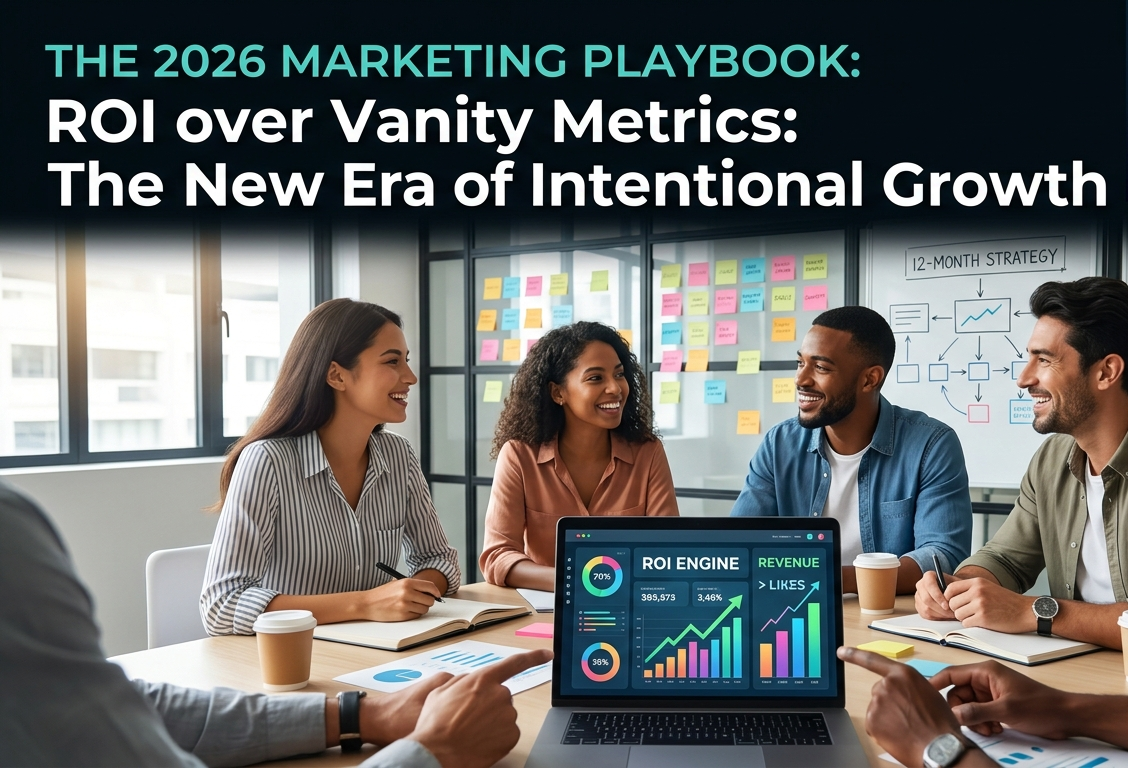
One of the biggest shifts in 2026 is a collective rejection of “vanity metrics.” A million followers or ten thousand page views mean nothing if they don’t translate into qualified leads and pipeline growth.
Effective agencies today are adopting a Business-Owner Mindset. They aren’t just asking about your brand colors; they are asking about your profit margins, average ticket price, and operational capacity.
- The Trend: Tighter marketing budgets and economic volatility have made “revenue-first” marketing the only sustainable path.
- The Strategy: Focus on full-funnel performance. This involves tracking a lead from the first touchpoint all the way to the final sale, ensuring your cost-per-acquisition (CPA) remains healthy relative to your customer lifetime value.
3. The “Plug & Play” Marketing Department
The talent gap is real. Many businesses find themselves caught between hiring an expensive full-time CMO or managing a disjointed group of unreliable freelancers. This has given rise to the “Plug & Play” Marketing Department.
This model provides businesses with a dedicated, external team that functions as an internal department. It offers the agility of a startup with the deep expertise of a specialized firm.
- The Trend: Mid-market firms are increasingly outsourcing their entire marketing execution to partners who offer 12–18 month strategic roadmaps rather than one-off tasks.
- The Strategy: Look for a partner who offers a “mix and match” suite of services—strategy, lead gen, and web design—that can scale up or down based on your current business goals.
4. AI as the “Invisible Backbone,” Not the Mouthpiece
By now, everyone is using AI. However, the trend for 2026 is moving away from visible AI (generic, robotic blog posts) and toward invisible AI (backend optimization).
- The Trend: AI is being used for predictive analytics—identifying which leads are most likely to convert before they even talk to a salesperson.
- The Strategy: Use AI for the “heavy lifting”—data analysis, audience segmentation, and A/B testing creative elements. But keep your brand voice human. In a world of automation, authenticity is your greatest competitive advantage.
5. Intent-Based Lead Generation
Digital marketing in 2026 has shifted from keywords to intent. We no longer just target people who search for “marketing services.” We target people whose behavior suggests they are ready to buy marketing services.
- The Trend: “Social SEO” is exploding. Platforms like Reddit and YouTube have become primary search engines because users trust peer-to-peer recommendations and video demonstrations over traditional ads.
- The Strategy: Build “topic clusters.” Instead of one-off posts, create a series of content pieces that establish your authority on a specific niche. This builds a “moat” around your brand that is difficult for competitors to penetrate.
6. Web Design as a Salesperson
Your website is no longer a digital brochure; in 2026, it is your hardest-working salesperson. A high-performing site must be “conversion-centric,” meaning every element is designed to move a visitor toward a specific action.
- The Trend: Speed and mobile-first design are now table stakes. The new frontier is personalization. * The Strategy: Modern websites use data to change content dynamically based on who is visiting. A returning customer should see different information than a first-time visitor. This level of relevance is what drives modern conversion rates.
Leading Your Business with Purpose
The common thread through all these trends is purpose. Whether it’s a data-driven ad campaign or a 12-month strategic plan, every action must have an intent behind it.
If you are a business owner looking to grow in 2026, stop asking how you can get more “clicks.” Start asking how you can provide more “value” at the exact moment your customer needs it. When you align your marketing strategy with your business’s actual health and goals, marketing stops being a cost and starts being an investment.
Ready to build a strategy that delivers ROI instead of just noise? It starts with a partner who thinks like a business owner. Let’s move beyond the vanity metrics and start building your growth engine today.